
Advanced Training Tips for CGC Success
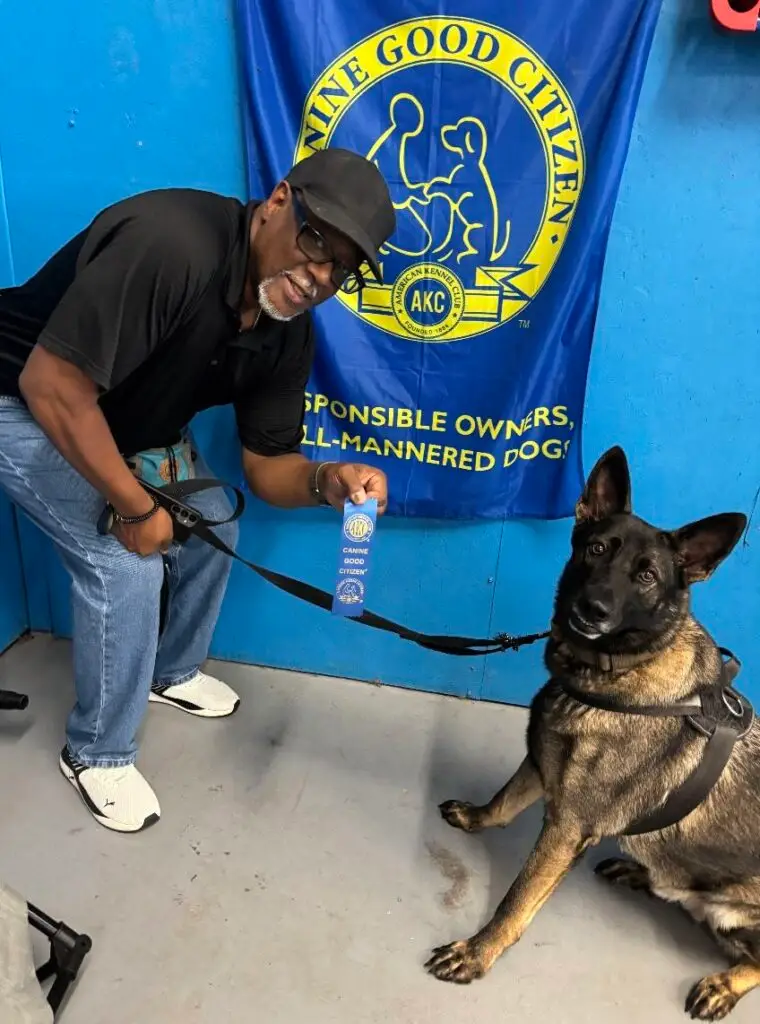
Success
1. Increase Distraction Levels
-
Once your dog masters a skill in a quiet area, train in locations with distractions (parks, pet stores, or near other dogs).
2. Reinforce Calmness
-
Teach a “settle” command where your dog lies down and relaxes. This helps with the Supervised Separation portion of the CGC test.
3. Train with Different Handlers
-
To pass the CGC, your dog must remain calm when handled by a stranger. Have friends or trainers practice key skills with your dog.
4. Vary Training Times and Locations
-
Dogs learn best when exposed to different environments. Train in different places, at different times of day, and with different people.
Recommended Equipment for Training
Using the right tools can make training smoother and more effective.
✔ Flat Collar or Martingale Collar – Required for the CGC test (no prong or choke collars).
✔ 6-Foot Leash – A standard leash is used for testing and daily training.
✔ Training Treats – Small, high-value treats keep your dog motivated.
✔ Clicker (Optional) – A clicker can mark desired behaviors consistently.
✔ Brush and Grooming Tools – Helps with the Appearance & Grooming portion of the CGC test.
✔ Long Line (15-30 ft) – Useful for practicing “Coming When Called.”
Sample Training Log
Tracking progress helps identify strengths and areas needing improvement. Use this log to stay organized.
|
Date |
Skill Trained |
Success Rate (%) |
Notes/Improvements Needed |
|---|---|---|---|
|
2/10/25 |
Accepting a Friendly Stranger |
80% |
Needs more practice with men wearing hats. |
|
2/12/25 |
Walking on a Loose Leash |
60% |
Pulls when excited—work on distractions. |
|
2/14/25 |
Coming When Called |
90% |
Excellent recall in low-distraction areas. |
|
2/16/25 |
Supervised Separation |
70% |
Whines after 30 seconds—gradual increase needed. |